Beyond the discontinuation notice: How independent distributors close the obsolescence gap
 March 16, 2026
 6 min read
By Alex Bailey, Senior Key Account Manager, EU Automation

Alex Bailey is a Senior Key Account Manager at EU Automation, working closely with manufacturers across multiple industries to help them navigate automation part obsolescence, legacy system support and unplanned downtime risks. With hands-on experience sourcing discontinued components and advising customers through complex lifecycle challenges, Alex provides a frontline perspective on how obsolescence really impacts modern manufacturing.
Obsolescence is not the problem. Silence is.
In manufacturing, obsolescence is not a question of if but when. From the moment an automation component is released, its lifecycle begins ticking towards eventual discontinuation. Yet many of the challenges associated with obsolescence do not stem from parts being phased out, they stem from how, when and whether that information is communicated.
For engineers, procurement teams and plant managers, poor lifecycle transparency can be just as disruptive as a failed component. Missed notifications, unclear phase-out documentation and fragmented communication across multiple OEMs often lead to reactive decision making, inflated costs and avoidable downtime.
Siemens reported unplanned downtime now costs the world’s 500 biggest companies 11% of their revenues [1].
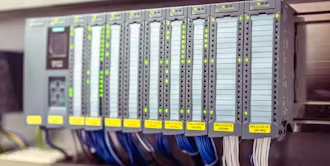
This is becoming increasingly relevant when major automation parts such as SIMATIC S7-300 and ET200M entered their discontinuation phase on 1st October 2025 [2]. These systems remain deeply embedded in production environments worldwide and for many end users, the reality of their phase-out only becomes clear when a purchase order is rejected or a critical failure occurs.
How OEMs communicate lifecycle change
From an end user perspective, OEM lifecycle communication is often inconsistent and difficult to interpret.
There are effectively two layers of manufacturers involved in automation systems.
- The first are original component manufacturers who produce the underlying technology.
- The second are original equipment or machine manufacturers who integrate those components into complete systems.
In practice, lifecycle information rarely flows cleanly between the two.
End users typically engage directly with equipment manufacturers or authorised distributors rather than component manufacturers. As a result, obsolescence is often discovered late, through an obsolete notification or a bounced purchase order.
Good lifecycle communication means advance, specific, part-level notices (e.g., EOL dates, last-time-buy windows, support timelines and recommended successors). Yet industry data shows that around 25–30% of end-of-life changes occur without any product change notification (PCN), meaning users might not even get basic alerts unless they ask for them [3].
Did you find this article helpful?